In recent years, vegetable rennet has gained increasing visibility in the dairy industry, meeting a dual demand: that of vegetarian consumers and religious dietary requirements. Additionally, the growing demand for dairy products has pushed the industry to seek alternatives to traditional animal rennet.
The coagulation of milk using vegetable rennet is an ancient technique, deeply rooted in Mediterranean traditions. The ancient Romans used rennet derived from thistle to produce fresh cheeses meant for quick consumption. Today, numerous studies, such as “Evaluation of the Milk-Coagulating Ability of Three Types of Vegetable Rennet”, analyse the quality and coagulation times of milk using these alternative methods.
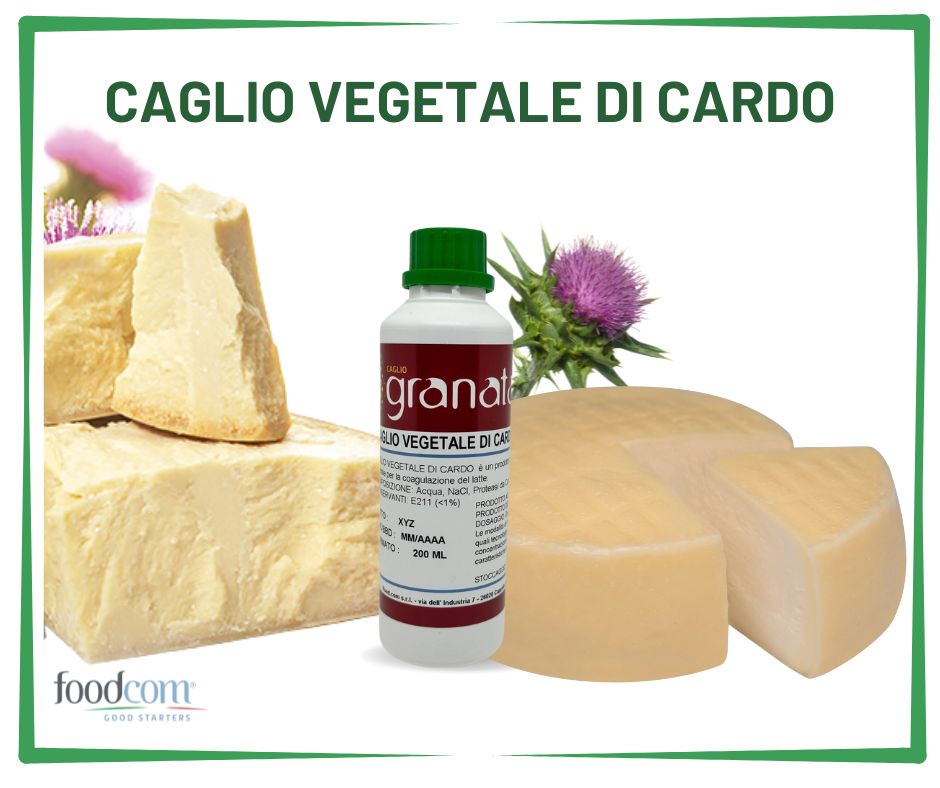
The primary enzymes used include ficin, cardosin, and papain, and more recently bromelain (extracted from pineapple), sourced from the latex, roots, seeds, and flowers of plants such as fig, thistle, and papaya. These vegetable rennets hydrolyse κ-casein, forming the curd and partially hydrolysing β-casein. Among these, cardosin stands out for its long history and ability to produce well-structured cheeses, while ficin also demonstrates excellent performance in the production of various cheeses.
Although microbial and animal rennets are easier to use and less expensive, vegetable rennet plays a fundamental role in preserving local traditions and promoting animal welfare. Spain and Portugal, in particular, are the primary users of this technique, especially for sheep and goat cheeses. Rennet derived from thistle, in particular, exhibits a coagulating ability similar to that of animal rennet. The preparation involves extracting enzymes from leaves soaked in water, producing two enzymes: cardosin A and cardosin B, which are similar to chymosin and pepsin in terms of hydrolysis. In Italy, the most notable cheeses made with vegetable rennet are Caciofiore di Columella, a product with a long tradition recognised as a Slow Food presidium, and the Piedmontese Gran Kinara. Cheese production using vegetable rennet is not yet widespread on an industrial scale. To enjoy a fully vegetarian cheese, consumers often need to turn to small artisanal and local producers who are the custodians of ancient recipes.