
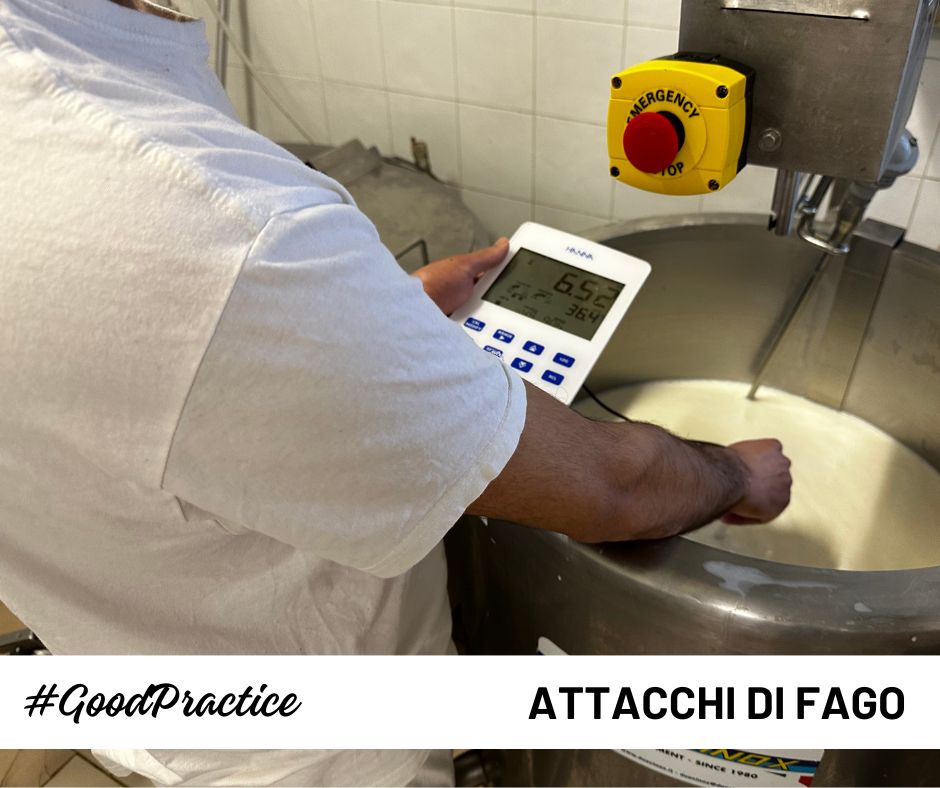
The presence of bacteriophages (or “phages”) is one of the main silent enemies in the world of dairy fermentations. These viruses, specific to lactic acid bacteria, can wipe out entire batches of starter cultures, slowing down or even completely stopping the drop in pH required to produce quality cheese and yogurt. Since phages replicate exclusively in liquid environments—milk, whey, and other processing fluids—it is crucial to adopt targeted strategies to contain them.
First of all, it is important to remember that effective sanitation—with hot washes and disinfection using peracetic acid or alkaline detergents—drastically reduces the viral load present on equipment and machinery, interrupting the phage replication cycle. However, since a single phage can release hundreds of new virions within minutes, hygiene alone is not enough.
This is where starter culture rotation comes into play: regularly replacing the strain used for fermentation with another that has different resistance characteristics. The main guidelines, based on the experience of several dairies and industrial studies, are as follows:
Multiple reuse in the same vat
If the same starter is used two or more times in the same vat—even with different processing technologies—it is advisable to rotate the strain on the second use. This prevents the accumulation of phage remnants in the fluids and maintains high acidification efficiency.
Daily use in a single vat
If the starter is only used once per day, a weekly rotation may be sufficient. In small-scale production, some companies extend the interval even further, relying on daily sanitation.
Rotation plans with multiple strains
A more structured approach involves alternating between 3–5 mixes of different strains (rotations) with similar acidification profiles, ensuring consistent final yield while disrupting the phage life cycle.
Naturally, usage intensity and the number of reuses of the same vat remain key factors in defining rotation frequency. In addition, the use of backup cultures—reserve strains highly resistant to the most common phages—ready to be employed in case of emergency, is recommended.
At the same time, strict monitoring of air pressure in processing areas completes the picture of best practices. By adopting these integrated strategies—effective hygiene, continuous sanitation, and targeted starter rotation—the threat of bacteriophages can be kept under control, ensuring consistent, homogeneous, and high-quality fermentations.