The Penicillium Genus
The Penicillium genus, part of the Aspergillaceae family, is a group of ascomycete fungi characterised by ascospore formation. Known for their grey-green moulds, these fungi feature thin hyphae—cellular filaments approximately 5 µm in diameter—that repeatedly branch to form a complex mycelium resembling a brush. This genus includes around 100 species, mostly saprophytic, such as P. crustaceum, which forms crusts on organic substances.
Moulds of the Penicillium genus grow optimally at about 25°C, though growth begins as low as 5°C, while temperatures above 37°C inhibit their development. The ideal environment for these moulds has a pH range of 4.5 to 7.5, optimal for mycelium production.
Studies have shown that the proteolytic activity of Penicillium moulds leads to the solubilisation of over 50% of total nitrogen in cheeses like Roquefort and up to 65% in Danish Blue. This intense proteolysis breaks down α-casein, as seen in Gorgonzola, releasing aromatic compounds that give these cheeses their characteristic flavour and aroma.
Penicillium moulds produce protease enzymes such as metalloproteinases, aspartoproteinases, carboxyproteinases, and aminoproteinases. They also possess highly active lipolytic enzymes that continuously hydrolyse fats, crucial for releasing fatty acids and other substrates that contribute to the cheese’s flavour.
Production Technology of Blue Cheeses
Blue cheeses are characterised by high moisture content, which, combined with the proteolytic activity of the moulds, causes the paste to progressively soften during maturation. These cheeses can range from soft varieties like Brie to hard varieties like Roquefort.
During maturation, the increase in pH raises the net charge of caseins, altering protein-protein and protein-water interactions and influencing the caseins’ water retention capacity.
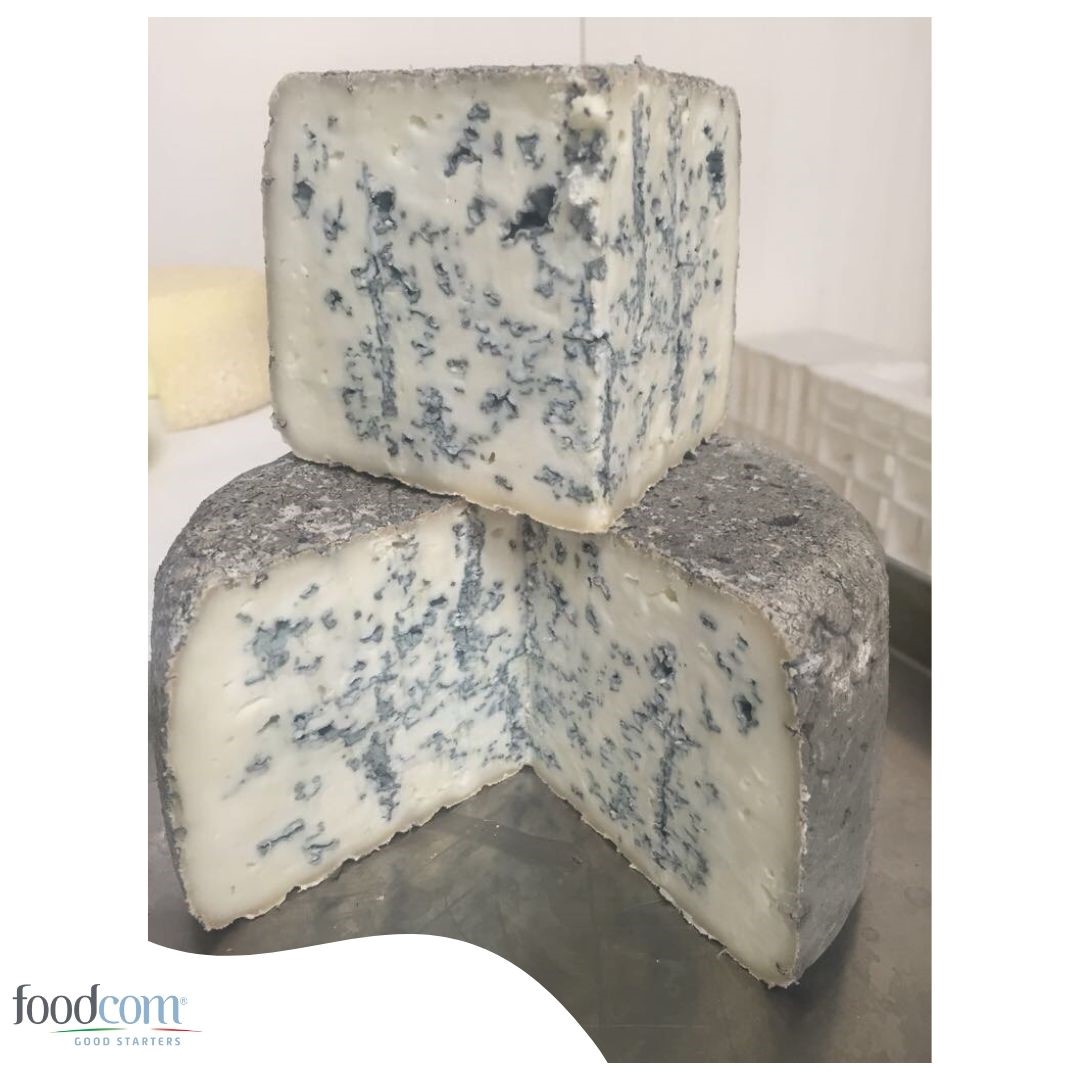
In Europe, blue cheeses account for about 5% of the dairy market, while white cheeses exceed 10%. The blue veining develops during maturation when proteolysis and lipolysis degrade proteins and fats, forming amine radicals and ammonia, which raise the paste’s pH.
To ensure proper development of Penicillium moulds, the cheese paste must be open to allow oxygen to reach the aerobic moulds. This openness can be achieved in three ways:
- Microbial: Microorganisms produce gas during fermentation, creating openings in the paste.
- Mechanical: Using needles or pins to pierce the paste.
- Combined: Mechanical piercing combined with reduced fermentation to produce gas.
These methods ensure adequate mould development, giving blue cheeses their distinctive flavour and texture characteristics.