
There’s a magical moment that anyone who loves cooking or simply eating has experienced at least once: you slice into a freshly baked pizza, lift a piece and… the strands of mozzarella stretch, creating little bridges of flavor between one bite and the next. But have you ever wondered why some cheeses stretch like this and others don’t? Why mozzarella yes and Parmigiano no? It’s not just a matter of texture or aging, but the result of precise biochemical processes and technological choices.
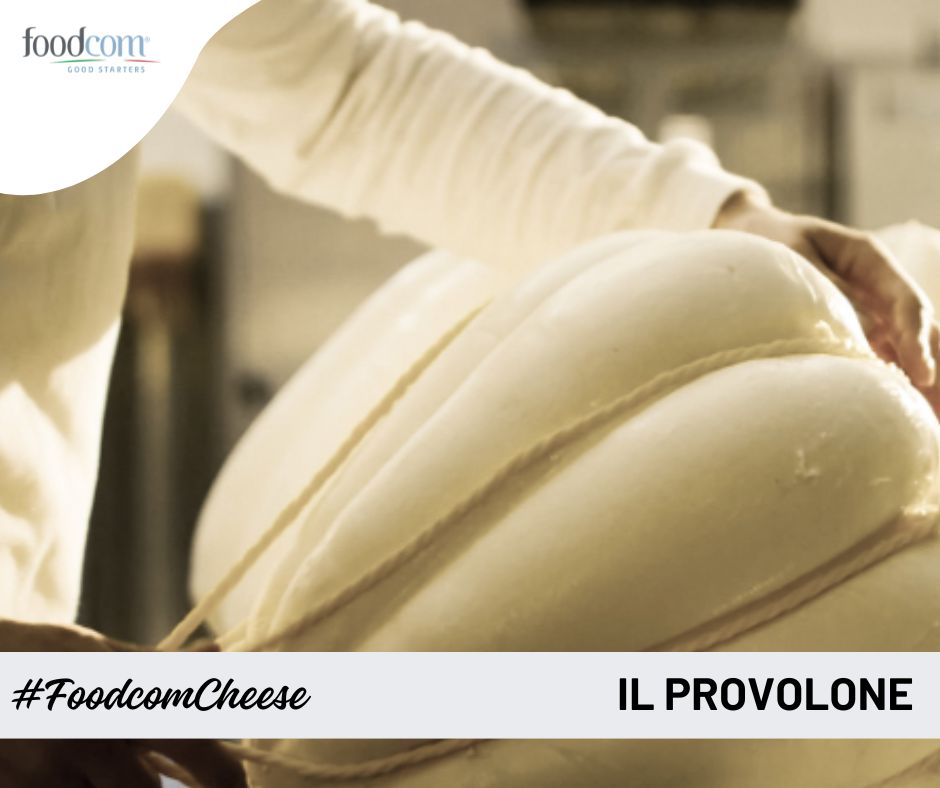
The real star of this phenomenon is a protein: casein. It’s the one doing most of the work in building the cheese’s structure. When milk is coagulated, casein forms a three-dimensional network that traps fats and water. In pasta filata cheeses such as mozzarella, provolone, and scamorza, this network is “reshaped” during a step called stretching, where the curd is immersed in hot water and pulled until long, flexible fibers are obtained. It’s this processing, together with the cheese’s composition, that allows the famous “stretch” once heated.
But casein alone is not enough: moisture and fat content also play a role. Fresh cheeses, with a moisture rate above 50–55%, have a softer, more elastic consistency, which favors stretching of the protein mass during cooking. Mozzarella, for example, contains between 58% and 62% water. This allows it to melt and stretch without separating. Moreover, fat — which in a good quality mozzarella is around 22–24% — helps distribute heat evenly and prevents the cheese from splitting into oil and solids. It’s a delicate but crucial balance.
Aging is another key factor. A young cheese retains a protein network that’s still “soft” and able to reform with heat. Aged cheeses, instead, have lost much of their water, and their protein structure has become rigid. Parmigiano Reggiano, for example, contains only 30% water and over 32% protein solids. When heated, it doesn’t melt like mozzarella but tends to crumble or brown, releasing those crunchy crystals so loved by gourmets. The difference is not just chemical, but sensory.
And then there’s temperature, often underestimated. Some cheeses only stretch within a certain temperature range. Mozzarella, for instance, melts around 60–65 °C and starts to stretch well above 70 °C. Cheddar, if brought to too high a temperature, risks becoming oily and separating. Hard cheeses like pecorino or Grana Padano don’t stretch because their protein structure has been “locked” by long aging and very low water content.
According to data from CNR and CREA, only a small portion of Italian cheeses (about 12%) fall into the “stretchy” category. The majority of our PDO products are aged or semi-aged cheeses, excellences that focus on flavor, aroma, and structure rather than oven performance. If you want a pizza with that melty stretch or a panzerotto with a “wow” effect, go for fresh cheeses with good moisture and a pasta filata process. If, instead, you’re after bold flavors and complex textures, look elsewhere — perhaps to a sprinkling of pecorino which, even if it doesn’t stretch, still makes its presence felt.