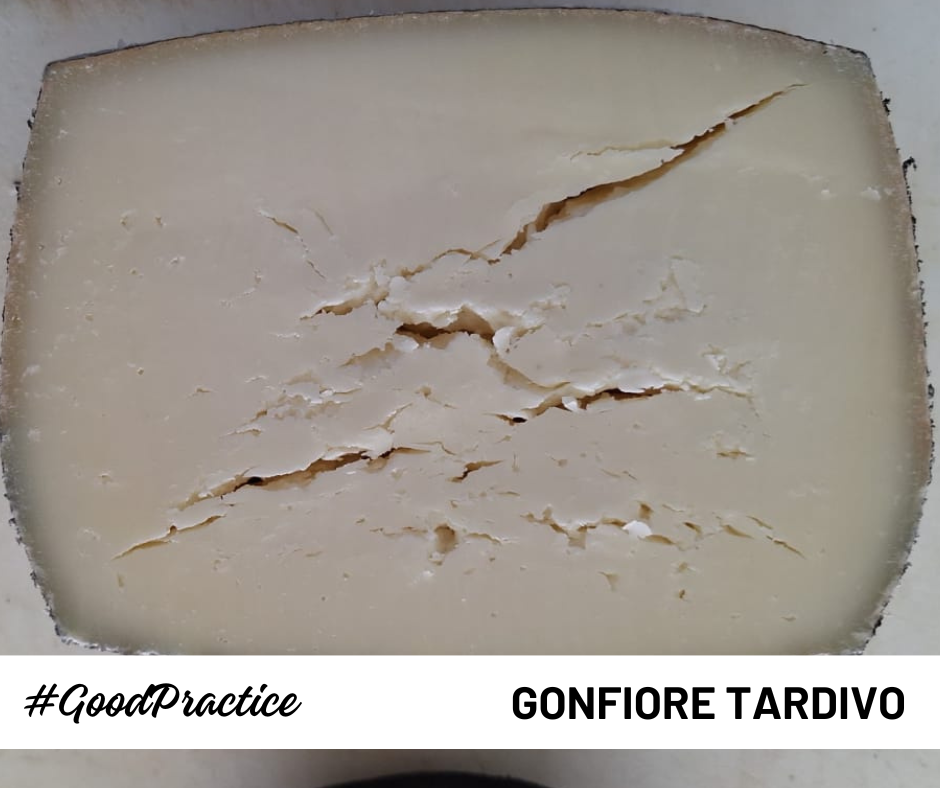
Late blowing is a defect that occurs during the maturation of cooked and hard cheeses, such as Grana Padano DOP and Parmigiano Reggiano DOP. This issue arises from the activity of anaerobic spore-forming bacteria, particularly Clostridium tyrobutyricum, which produce gases as a result of metabolising lactates in the cheese. The resulting gas causes visible swelling and structural defects in the cheese paste, compromising its quality and commercial value.
The Role of Clostridium tyrobutyricum
Clostridium tyrobutyricum thrives in anaerobic conditions, feeding on lactates and generating gases that become trapped in the cheese paste. This process leads to unwanted swelling, particularly problematic for cheeses requiring long maturation periods.
A key characteristic of late blowing is that it manifests months after production, during the maturation phase, making it challenging to detect early. Compounding the issue, Clostridium spores are highly resistant, often surviving thermal treatments or high cooking temperatures applied to milk during production, only to develop later during maturation.
Solutions Adopted by Grana Padano and Parmigiano Reggiano
The two flagship DOP cheeses, Grana Padano and Parmigiano Reggiano, employ different strategies to combat this issue, primarily influenced by differences in their production regulations.
Grana Padano DOP
- Silage Use and Lisozyme Application:
Grana Padano permits the use of silage in cattle feed, which can increase the presence of Clostridium spores in milk. To address late blowing, Grana Padano employs lysozyme, a natural enzyme capable of degrading the cell walls of the bacteria responsible for the defect. This approach has maintained the high quality of the product while allowing the use of silage in feed.
Parmigiano Reggiano DOP
- Strict Feed Regulations:
Parmigiano Reggiano prohibits the use of silage in cattle feed. This significantly reduces the presence of spores in the milk, as a diet of hay and fresh forage is less conducive to the proliferation of Clostridium tyrobutyricum. Without relying on lysozyme, Parmigiano Reggiano focuses on prevention through controlled feeding practices and rigorous management of the entire production chain.
The Effectiveness of Lysozyme
The use of silage, if not carefully managed to control fermentation, can lead to the proliferation of spore-forming bacteria, necessitating tools like lysozyme to control spore spread or naturally nisin-producing starter cultures. Late blowing caused by spore-forming bacteria poses a significant challenge for producers of long-aged cheeses. Grana Padano addresses the issue with corrective measures like lysozyme, while Parmigiano Reggiano focuses on prevention through strict feeding practices. Both solutions highlight the critical importance of stringent production control to maintain the quality and integrity of these world-renowned Italian cheeses.