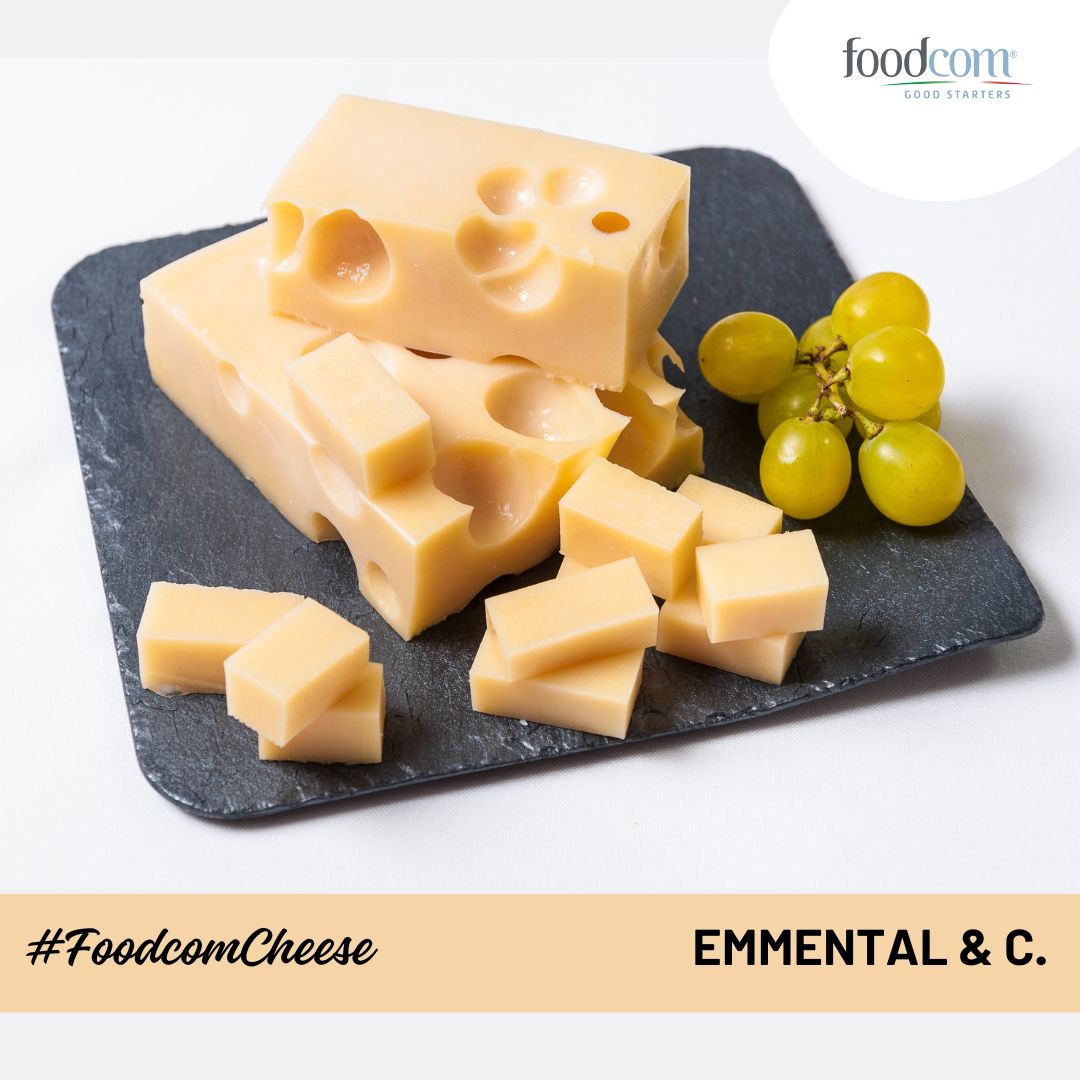
When thinking of Swiss cheeses, the image that often comes to mind is of cheeses with large holes (eyes) and a unique nutty aroma. These cheeses owe their characteristic flavour and appearance to a specific production process involving propionic acid bacteria and specialised heating techniques.
The Essence of Propionic Cheeses
Switzerland is considered the birthplace of “propionic cheeses.” These cheeses are distinguished by the use of high-temperature heating techniques during production and the inclusion of ripening cultures containing propionic acid bacteria. These bacteria are responsible for the formation of the characteristic eyes and the nutty aroma.
The Production Process
The production of propionic cheeses involves the use of meso-thermophilic starters. Here’s how the process works:
- Introduction of Mesophilic Starter
Initially, a mesophilic starter culture is added to the milk. This culture starts the acidification process at lower temperatures. - Temperature Increase
As the temperature rises, the activity of mesophilic bacteria gradually decreases. At this point, thermophilic cultures take over, continuing the acidification process initiated by the mesophiles. - Use of Propionic Acid Bacteria
In addition to the main starter culture, ripening cultures containing propionic acid bacteria are added. These bacteria, such as Propionibacterium freudenreichii and Propionibacterium freudenreichii subsp. shermanii, ferment and produce propionic acid, acetic acid, and large amounts of carbon dioxide, which form the characteristic eyes in the cheese.
Enhancing Flavour with Lactobacillus helveticus
To achieve an even richer and more distinctive flavour, cultures containing Lactobacillus helveticus are used. These cultures excel in acidification and maturation, imparting a pronounced nutty taste. Cultures such as PT and TMH are particularly effective in delivering these aromatic notes.
Choosing the Right Propionic Culture For selecting cultures containing propionic bacteria, the LINEA PROPION range is recommended. This includes monocultures of Propionibacterium freudenreichii and Propionibacterium freudenreichii subsp. shermanii. These strains efficiently ferment lactose, promoting acid formation and ensuring the unique characteristics of Swiss-style propionic cheeses.