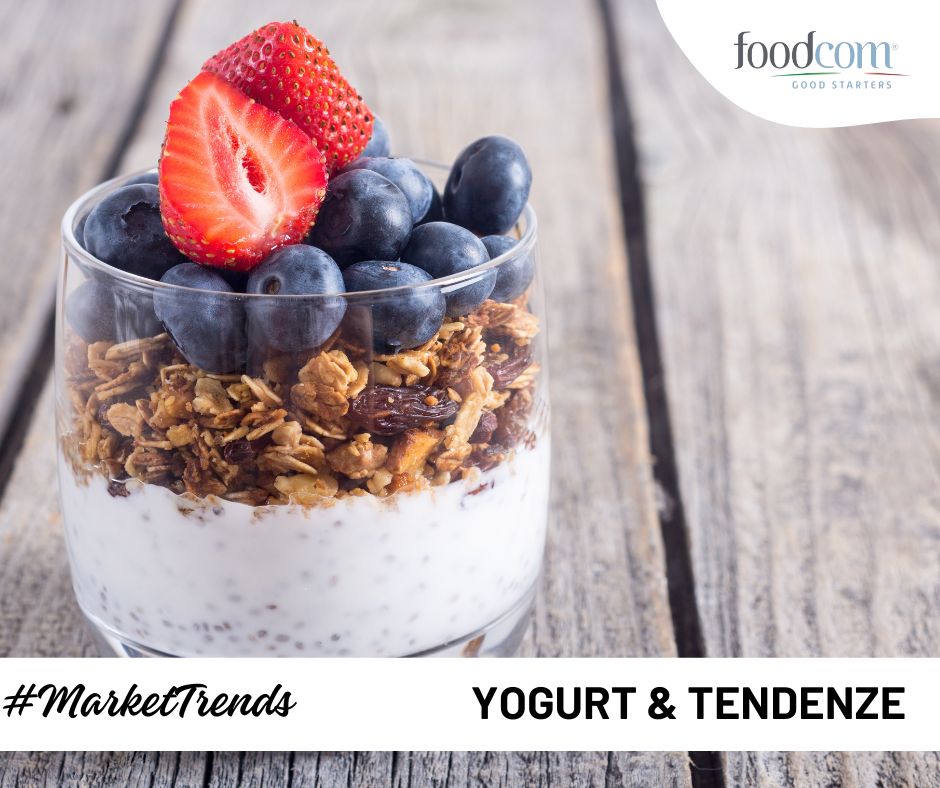
In 2023, household spending on yogurt saw a significant increase of 13%, primarily driven by a 12.5% rise in prices, while purchase volumes grew only slightly (+0.4%). These figures, provided by Ismea/NielsenIQ, highlight the resilience of the market, where yogurt remains a staple in the Italian diet despite economic challenges impacting consumers.
Market Trends: Traditional vs. Innovative Yogurts
Traditional yogurt continues to dominate, with 89% penetration, maintaining its popularity over other variants such as probiotic yogurt (41%), dual-compartment yogurt (42%), and classic drinkable yogurt (22%). However, the market is shifting, with increasing demand for products offering specific benefits, as evidenced by the growing penetration of innovative yogurt types.
New Trends in Yogurt Consumption
Research from GfK Consumer Panel Services for the year ending July 2023 confirmed that yogurt is found in 92% of Italian households. On average, each family purchases 17 kg of yogurt annually, spread across 23 buying occasions, amounting to a total spend of nearly €70. However, products with specific and innovative functions are driving the growth.
- High-Digestibility Yogurt: Penetration has increased by 2.2 percentage points compared to 2020.
- Immune-Boosting Yogurt: Penetration rose by 3.3 percentage points.
- Protein Yogurt: This category experienced the largest expansion, with penetration increasing by 15.2 percentage points.
- Greek Yogurt: Penetration rose by 8.2 percentage points.
These two categories—protein and Greek yogurt—are particularly popular among younger consumers, especially those aged up to 45.
The Rise of Protein Yogurt and Kefir
Protein yogurt has experienced a significant boom, reaching 17% of Italian households. This category caters to consumers increasingly focused on protein-rich diets, particularly those with active lifestyles. Similarly, Greek yogurt, known for its thick texture and high protein content, is gaining traction among younger age groups.
Fermented milk kefir has also seen remarkable growth, with penetration increasing by 11 percentage points since 2020, reaching 22%. Unlike protein and Greek yogurts, kefir is particularly popular among older consumers aged 45 to 64, valued for its digestive and probiotic properties.
Key Takeaways The Italian yogurt market is evolving rapidly, driven by a growing demand for products with functional and specific benefits. While traditional yogurt maintains high penetration, innovative categories such as protein yogurt, Greek yogurt, and kefir are propelling growth. This reflects a shift in consumption habits, with a greater focus on products that cater to health, wellness, and nutritional specificity.