Mozzarella is undoubtedly the most consumed dairy product during the summer, with its demand and production increasing exponentially. If you’re a producer, it’s crucial to ensure that your mozzarella consistently meets high-quality standards and satisfies your customers’ tastes.
Colour Defects
- Green: This colour may indicate an excess of chlorophyll, a colouring agent sometimes used to mask the beta-carotene in cow’s milk mixed with buffalo milk.
- Yellow: Milk rich in beta-carotene, typical of pasture-fed animals.
- Red-Orange: Caused by an excess of tomato or citrus peels in the animals’ diet, more common in buffalo mozzarella.
Skin Defects
- Pitting or “Bubble Skin”: The mozzarella’s skin is covered in small bubbles. If the bubbles are as large as lentils, it could indicate coliform contamination. This defect is often due to excessive acidity and bacterial contamination in the brine, especially during summer. Mozzarella can be salvaged by immersing it in very cold brine (about 4°C).
- Delicate Skin: If slight pressure causes pieces of skin to peel off, the issue may be brine that is too cold or insufficiently acidic. Increasing the temperature and slightly acidifying the brine can improve the situation.
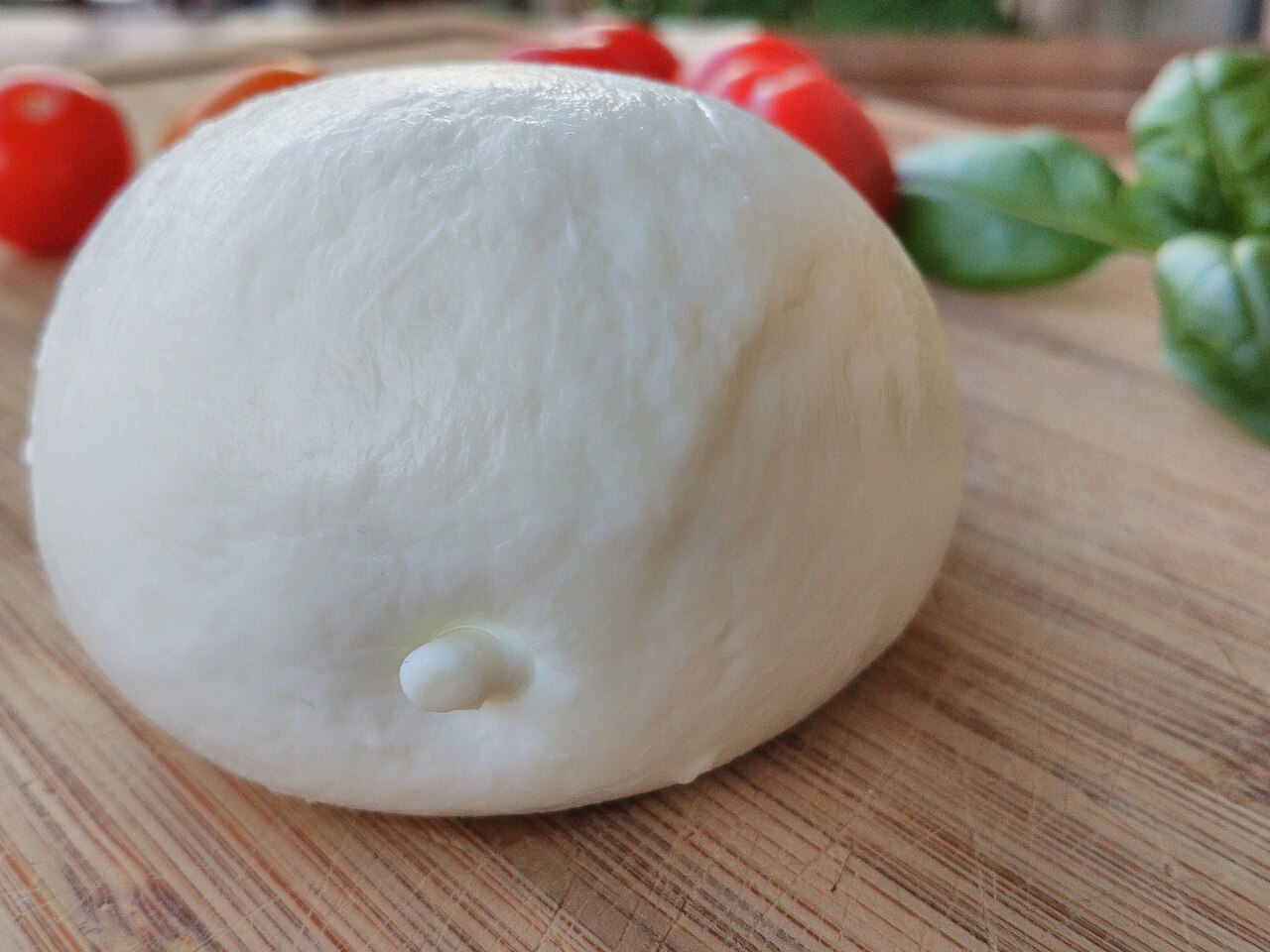
- Closure Defect: The mozzarella opens at the pinch point with slight pressure. It’s important to monitor the temperature during the moulding stage.
- Slimy Skin: The mozzarella’s skin disappears entirely, and the outer appearance resembles mature stracchino. This defect is caused by low brine acidity or overly softened water.
- “Banana Skin”: The skin is thick, and the mozzarella can be peeled like a banana. This defect results from exposure to cold or very high brine acidity.
Consistency Defects
- Softening: Mozzarella becomes too soft if the curd was stretched with too much boiling water or left in the hot water for too long. Adding cold water during stretching can partially correct the issue, though the final product will still be compromised.
- Hardening: This can occur early or late.
- Early hardening is noticeable during processing and may result from curd that is either under-ripe or over-ripe.
- Late hardening happens over time and is often caused by milk pasteurised at excessively high temperatures or heat-resistant bacterial loads.
- Swelling: Characterised by varying-sized bubbles that can make the mozzarella float in the brine. Proper hygiene and fermentation management can help reduce or eliminate this defect.
Taste and Aroma Defects
- Bitter Taste: Generally caused by excessive rennet or prolonged proteolysis. It may also result from the animals’ diet, particularly if it includes cruciferous plants or poorly stored maize silage.
- Rancid Odour and Flavour: Caused by lipase activity that releases strong-smelling fatty acids, usually due to poor-quality maize silage.
- Fishy Taste: Linked to feeding animals large amounts of beet pulp.
I hope this guide helps you better understand the potential defects in mozzarella and how to prevent them. With careful attention and the right techniques, we can always enjoy fresh and delicious mozzarella!